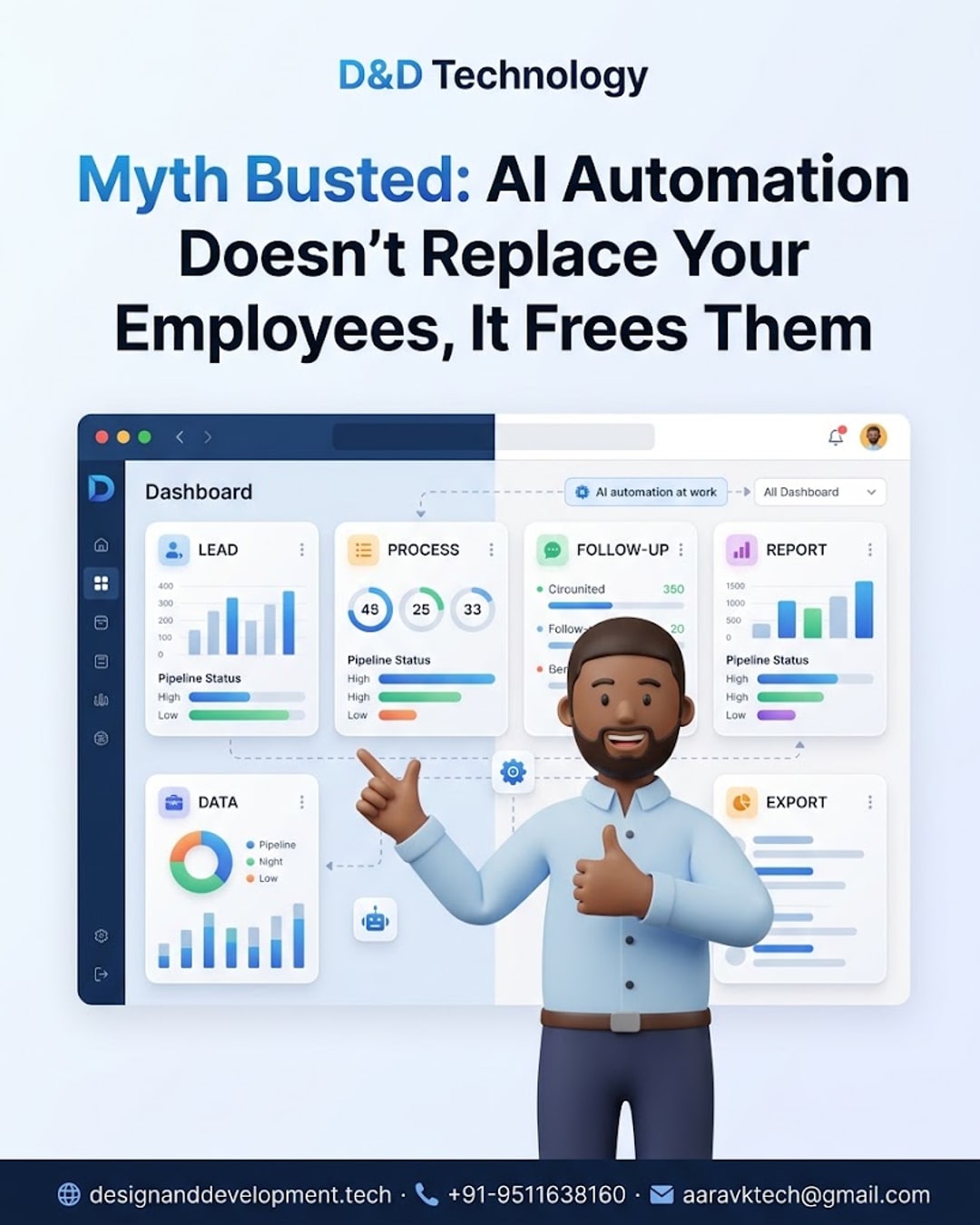
AI Automation Won't Replace Your Team — Here's What It Actually Does
If you've been putting off automation because you're worried it means cutting staff, you're not alone. It's one of the most common myths business owners believe before ever talking to a technology partner. The truth looks very different once you see automation in action, and this article breaks down exactly what changes when a business adopts AI automation.
Where This Myth Comes From
The fear isn't irrational. Headlines about AI replacing jobs are everywhere, and it's easy to assume the same applies to a mid-sized business automating its lead follow-ups or reports. But there's a big difference between large-scale industrial automation and the kind of business automation most companies actually need.
What AI Automation Actually Removes
In most businesses, the tasks that get automated first are the ones nobody enjoys doing anyway: manually typing customer data into spreadsheets, sending the same follow-up message fifty times a day, compiling weekly reports by hand. These are time-consuming, repetitive, and rarely require real judgment. Automating them doesn't eliminate a role — it eliminates the busywork inside that role.
What Happens to the Freed-Up Time
This is the part the myth ignores. When a sales executive stops manually chasing every lead and instead works from an automated follow-up system, they don't sit idle — they spend that time actually talking to prospects, closing deals, and handling the conversations that require a human touch. Automation shifts effort from repetitive tasks to relationship-driven work, which is usually where the real business value sits.
Automation Still Needs People to Run It
Every automated workflow needs someone to review exceptions, adjust rules, and make judgment calls the system can't. A CRM that automatically assigns leads still needs a sales manager watching performance. A reporting dashboard still needs someone interpreting the numbers. Automation supports decision-making; it doesn't replace the decision-maker.
What This Means If You're Considering Automation
If you're a business owner sitting on the fence about automating parts of your operations — lead follow-up, invoicing, reporting, customer support — the real question isn't whether it will cost jobs. It's whether your team is currently spending hours on tasks that don't need a human doing them manually.
My Take
If your team is drowning in repetitive admin work and follow-ups are falling through the cracks, automation isn't a threat to your staff — it's relief for them. Start small: automate one repetitive workflow, like lead follow-up or reporting, and watch what your team does with the time back. If it works, expand from there. D&D Technology builds these systems around your actual operations, not a one-size-fits-all template, so the automation fits how your business really runs.
🌐 designanddevelopment.in · 📞 +91-7296994920 · 📧 aaravktech@gmail.com


Discussion0