Why Your Billing Counter and Your Stock Room Should Finally Talk to Each Other
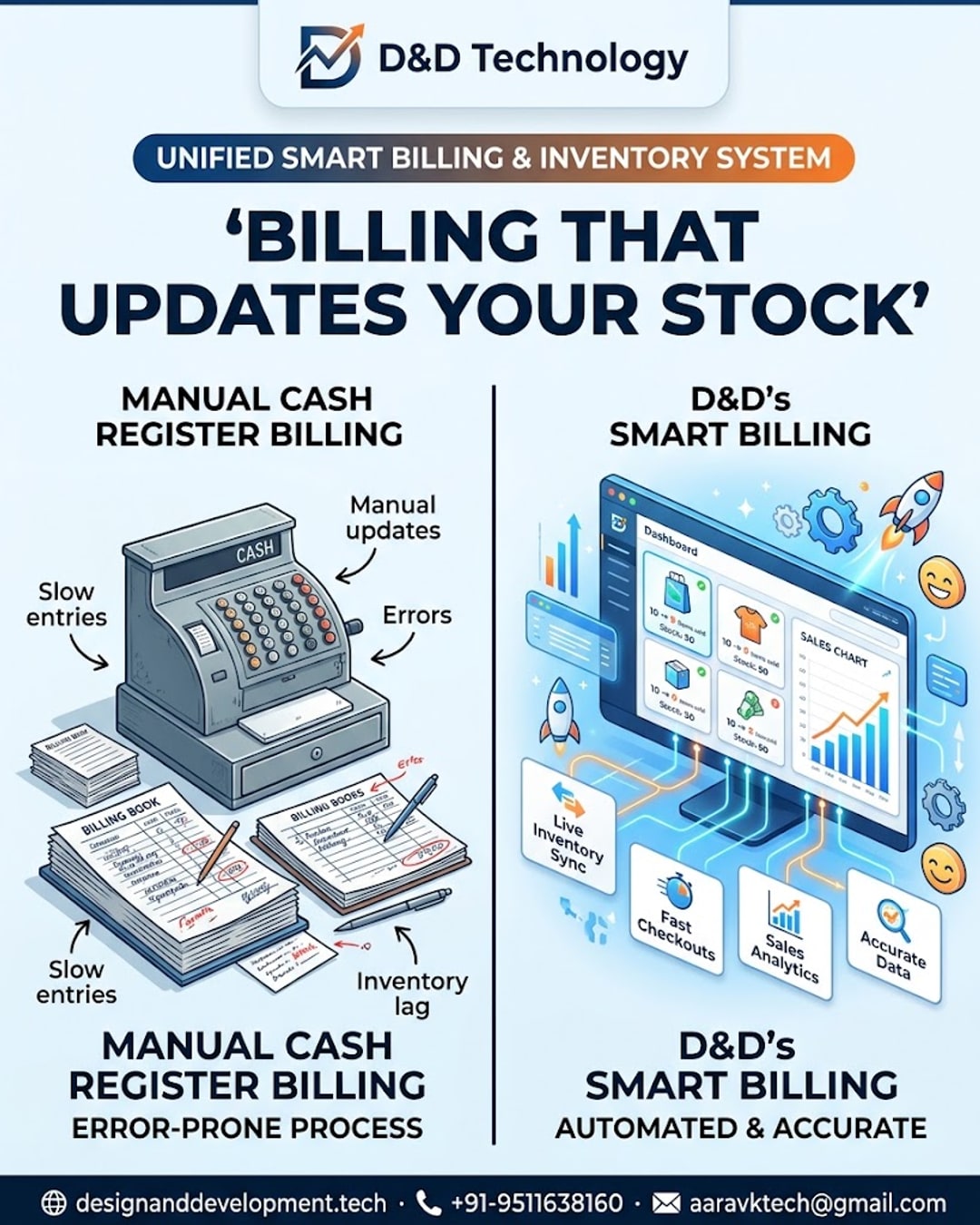
Walk into most small retail shops or wholesale counters in India and you'll find the same setup: a cash register or a plain billing book at the front, and a completely separate stock record somewhere in the back — sometimes a register, sometimes a spreadsheet, sometimes just memory. These two things almost never agree with each other, and that gap quietly costs business owners money every single month.
The Problem With Billing and Inventory Living Apart
When a sale happens at the counter, it gets written down. When stock needs updating, that's a separate job someone has to remember to do later — usually at the end of the day, if at all. Multiply that across dozens of transactions daily, and small errors pile up fast. Owners end up doing physical stock counts just to figure out what they actually have, because the paperwork can't be trusted.
What a Connected Billing System Actually Looks Like
D&D Technology builds custom billing systems where the counter and the stock room are the same system, not two. The moment a bill is generated, the inventory count updates automatically. There's no second entry, no end-of-day tally, no guessing which numbers are accurate. Owners can check stock levels from a phone or laptop and know it reflects what's actually happened at the counter that hour.
What Changes for the Business Owner
The most immediate difference owners notice is that reconciliation stops being a monthly headache. Low-stock items get flagged automatically instead of being discovered when a customer asks for something that's already sold out. Sales reports build themselves from real transaction data instead of being reconstructed from a billing book after the fact.
Is This Only for Big Retailers?
Not at all. Wholesalers, small shop owners, jewellery businesses, and factory stores all deal with the same disconnect between what's billed and what's in stock. The scale of the business changes how big the system needs to be, but the core problem — billing and inventory not talking to each other — is the same whether you run one counter or five.
My Take
If you're running a single counter with modest daily transactions, even a simple connected billing setup will save you real hours every week and stop the month-end stock-count scramble. If you're managing multiple counters, warehouses, or a wholesale operation with regular bulk orders, it's worth investing in a fuller custom system that also handles purchase orders and multi-location stock — the time and error savings compound a lot faster at that scale. Either way, the moment your billing and inventory are separate systems, you're paying for that gap somehow, whether in lost stock, wasted hours, or decisions made on bad numbers.
🌐 designanddevelopment.in · 📞 +91-7296994920 · 📧 aaravktech@gmail.com



Discussion0