Why Your Dental Clinic Keeps Losing Repeat Patients (And How to Fix It)
If you run a dental clinic, you already know new patient acquisition is hard work. But here's the part most clinic owners overlook: a huge share of lost revenue comes from existing patients who simply never come back for their scheduled cleaning or follow-up. Not because they switched clinics — because nobody reminded them in time. This is where a proper patient recall system changes everything.
What is patient recall, really
In simple terms, recall is the process of tracking when a patient is due for their next visit — a six-month cleaning, a follow-up on a root canal, an ortho check — and reminding them before they forget. Most clinics still manage this with a physical register or a loose spreadsheet that the front desk is supposed to check every morning. In practice, it gets skipped during busy weeks, and patients quietly fall off the radar.
The real cost of manual recall tracking
Every missed recall isn't just one lost appointment — it's a patient who may never return at all, plus the referrals they might have brought in. For a clinic seeing even 20-30 patients a day, the compounding loss over a year can be significant. Multi-branch clinic chains feel this even harder, since each location tracks recalls differently, with zero visibility for the owner.
What a custom recall automation system actually does
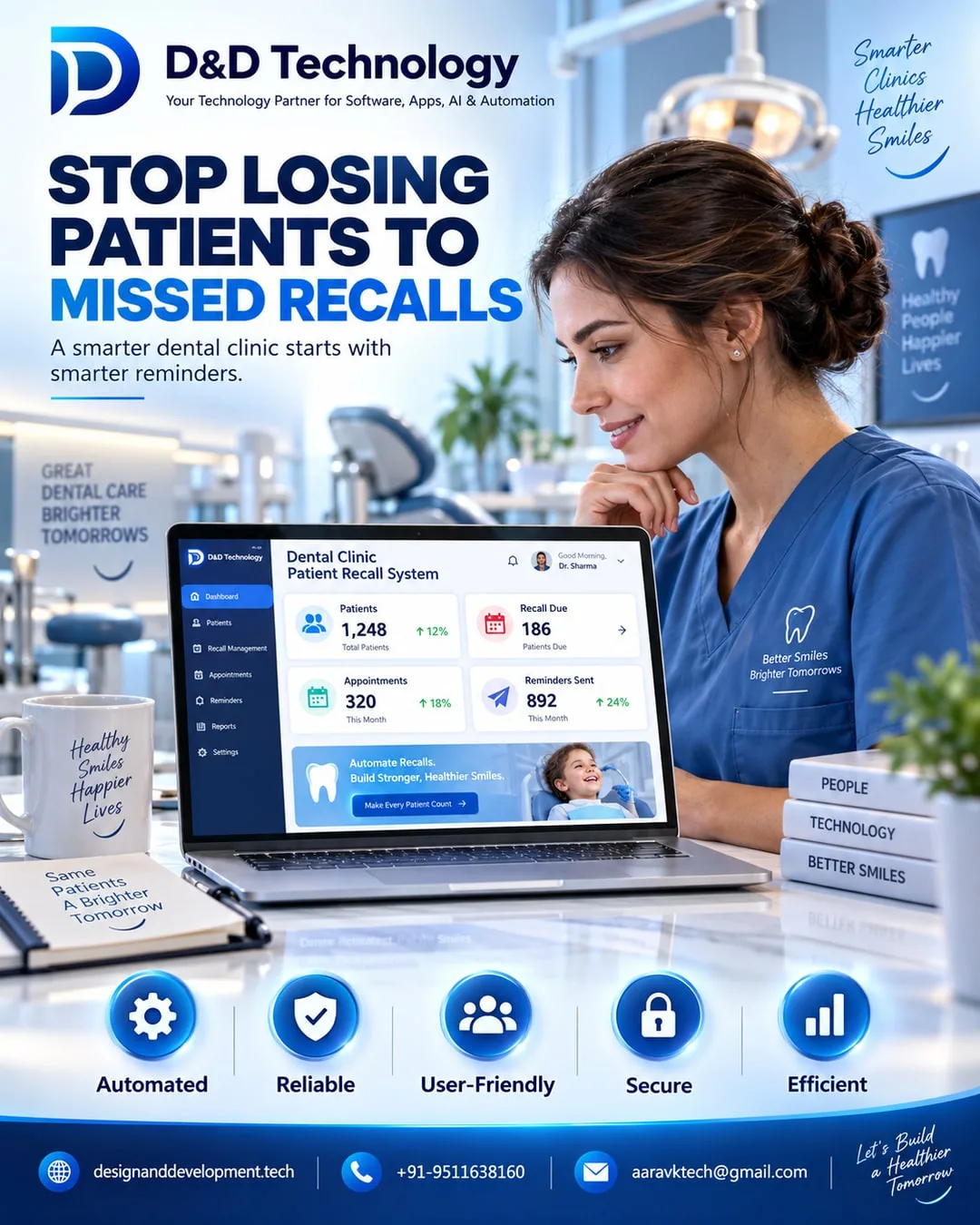
D&D Technology builds recall systems tailored to how a specific clinic actually operates. Instead of a generic template, we look at your patient flow, your treatment types, and your communication preferences, then build a system that automatically flags patients due for recall and sends reminders via WhatsApp, SMS, or email — without your staff manually checking anything. For clinic chains, this syncs across every branch so the owner has one dashboard showing recall status everywhere.
Dental clinics vs general healthcare businesses
A general hospital's follow-up needs look different from a dental clinic's recurring six-month recall cycle, and both differ again from a diagnostics center that follows up post-report. This is exactly why off-the-shelf clinic software often feels like a poor fit — it's built for the average case, not your case. Custom automation solves this by matching the system to your actual patient journey.
What to look for before you invest
Before automating anything, get clarity on three things: how many recall types your clinic actually has, which communication channel your patients respond to best, and whether you need single-clinic or multi-branch visibility. These answers shape whether you need a lightweight recall module or a fuller clinic management platform.
My take: if you're running a single clinic, start with just the recall + reminder module — it's the fastest win and pays for itself in recovered appointments within a few months. If you're managing multiple branches, it's worth building the recall system alongside a basic multi-branch dashboard from day one, so you're not retrofitting visibility later. Either way, don't settle for a generic hospital management suite that treats your dental practice like every other clinic — the recall cycle is too specific to your business to leave to a one-size-fits-all tool.
🌐 designanddevelopment.in · 📞 +91-7296994920 · 📧 aaravktech@gmail.com


Discussion0