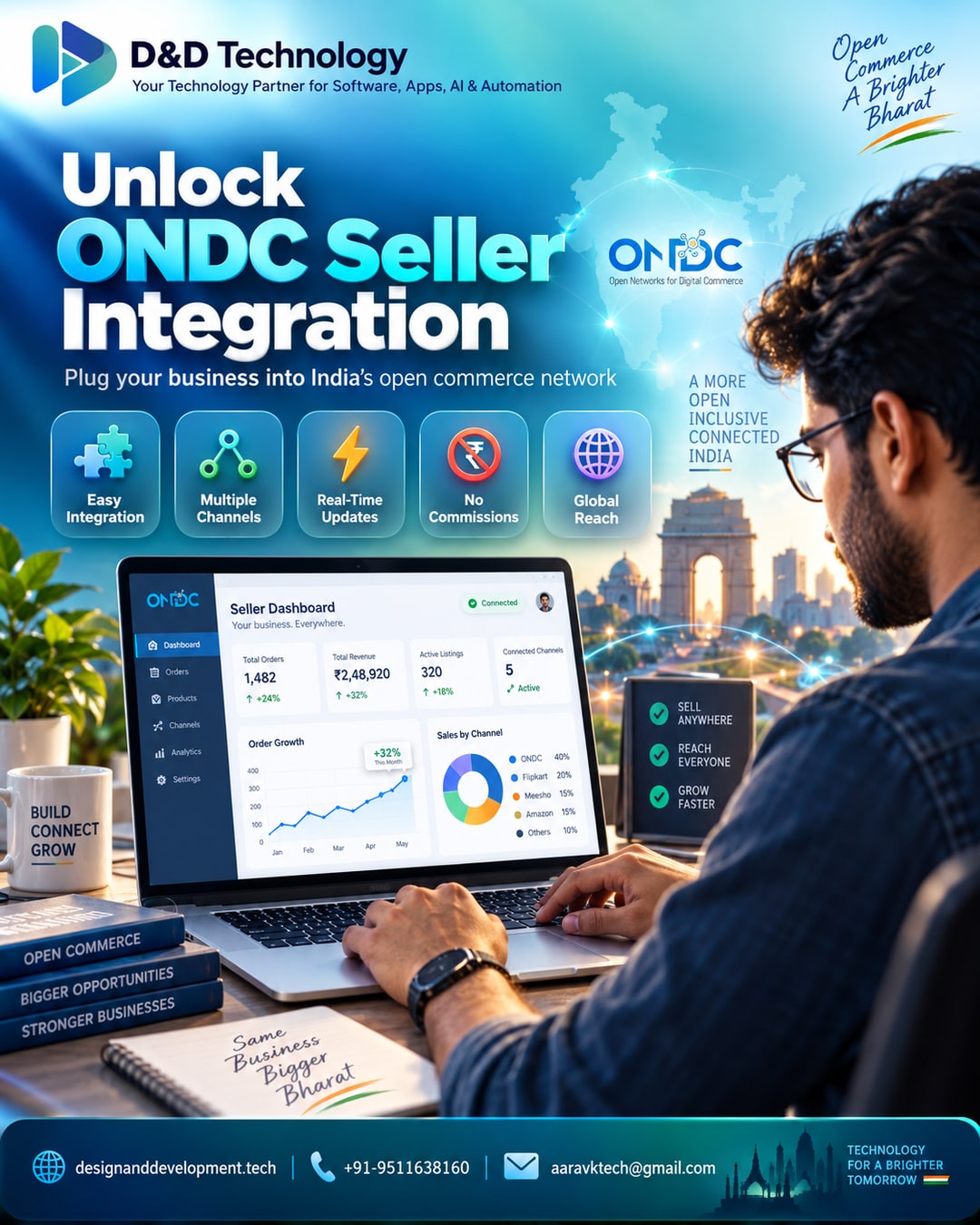
Why Every Indian Seller Should Be Watching ONDC Right Now
If you run a retail business, a manufacturing unit, or a D2C brand in India, there's a quiet but massive shift happening in how customers will find and order from you - and it's called ONDC. This post breaks down what it actually means for your business and why getting your ONDC seller integration right matters more than most sellers realize.
What ONDC actually changes for sellers
Unlike a single marketplace where you're competing inside one app's algorithm and paying its commission structure, ONDC is an open protocol. Your store's catalog can show up across multiple buyer-facing apps at once, without being locked into one platform's rules. For a business owner, that means more discovery channels from a single backend connection - if that connection is built properly.
Where sellers usually get stuck
Most businesses don't have a technical team that understands how to expose their inventory, pricing and order status through ONDC's network protocol. They either try to force-fit a generic ecommerce plugin that wasn't built for this, or they sit on the sidelines waiting for someone else to figure it out first. Both approaches cost time - and in a fast-moving space like this, early integration often means better visibility later.
What a real ONDC seller integration needs
A working integration isn't just a listing page. It needs live catalog sync so your products and prices stay accurate, order management that pulls incoming orders from multiple buyer apps into one place you can actually manage, and inventory connectivity so you're not accidentally overselling stock. This is exactly the kind of custom software layer D&D Technology builds - designed around your existing systems instead of replacing them.
Is ONDC integration only for big brands?
Not at all. In fact, smaller retailers and manufacturers may benefit the most, since ONDC removes some of the visibility advantage that large marketplace budgets used to buy. A well-built integration lets a local business compete for the same buyer attention as a much bigger one.
My take: if you're already selling online and have a functioning inventory or ERP system, this is a good time to add ONDC integration as a connected layer rather than waiting. If you're still managing orders manually, it's worth combining ONDC readiness with a broader digitization push so you're not integrating a modern network on top of a manual backend. Either way, this is a trend worth acting on now, not observing from a distance.
🌐 designanddevelopment.in · 📞 +91-7296994920 · 📧 aaravktech@gmail.com


Discussion0