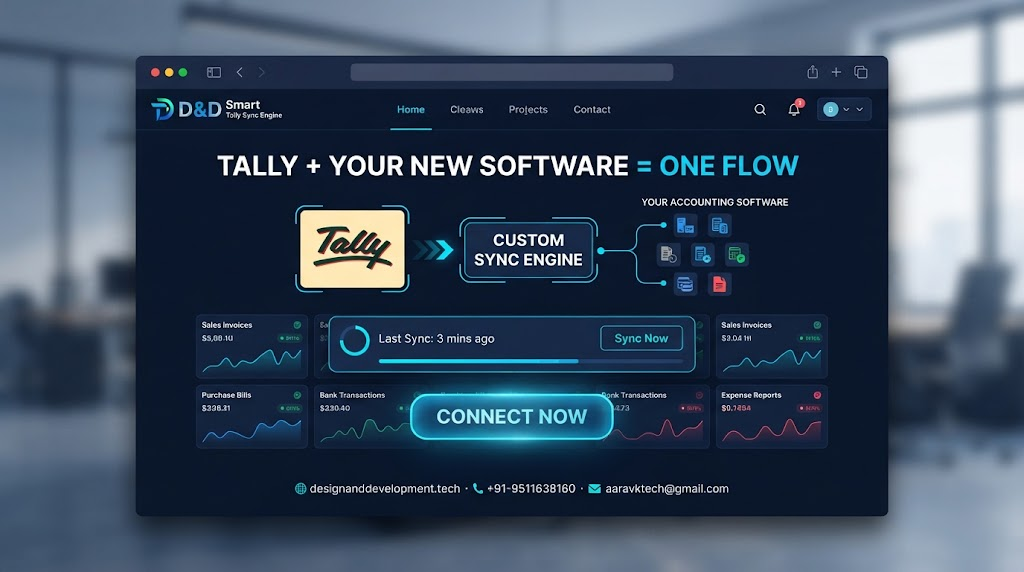
Your Software Should Work With Tally, Not Against It
Most Indian SMEs run their finances on Tally, and honestly, there's nothing wrong with that. It's reliable, familiar, and your accountant already knows it inside out. The real problem isn't Tally itself - it's everything built around it. Sales teams keep separate spreadsheets. Inventory gets tracked in a notebook or a second app. Someone spends two hours every evening copying numbers from Tally into a report for the owner. That gap between your accounting system and everything else is where growing businesses quietly lose time and money.
Why businesses hesitate to upgrade their systems
A lot of owners assume that getting proper business software means giving up Tally and starting over. That fear alone stops a lot of good decisions. Nobody wants to retrain their accountant or risk months of financial history during a messy migration. So they stick with a patchwork of Tally plus WhatsApp plus Excel, even as the business outgrows it.
What integration actually looks like in practice
At D&D Technology, we don't ask businesses to replace Tally. We build custom software - a dashboard, a CRM, an inventory system, whatever the business actually needs - and connect it to the Tally data that already exists. Ledger entries, invoices, stock movements, and payments sync automatically instead of being re-typed. Your accountant keeps working the way they always have. Your team gets a live, modern view of the business on top of it.
Where this matters most
This kind of integration pays off fastest for businesses with multiple moving parts - a manufacturer tracking stock across locations, a distributor managing dozens of dealers, or a retail chain where sales and accounts need to match up daily. Anywhere numbers currently move between systems by hand, an integration removes a step, a delay, and a chance for error.
What to expect from the process
It usually starts with a short discovery call to understand your current Tally setup and what you actually want visibility into - sales trends, stock levels, outstanding payments, whatever matters to you. From there we scope a connector and the software layer on top of it, build it, test it against real data, and roll it out without disrupting daily operations.
My take: if you're a small business running lean, Tally alone plus a bit of manual reporting is honestly fine for now - don't over-engineer it. But the moment you've got more than one person touching financial data, or you're checking numbers across two or three tools before every decision, that manual gap is costing you more than a proper integration would. It's not a huge project, and it doesn't ask you to change the tool you already trust - it just makes it work harder for you.
🌐 designanddevelopment.in · 📞 +91-7296994920 · 📧 aaravktech@gmail.com



Discussion0