Stop Losing Sales to Stockouts You Didn't See Coming
If you have ever told a customer sorry, we're out of stock right when they were ready to buy, you already know how much that one moment can cost. The good news is this is one of the easiest problems to fix, and you can start today without touching your entire business system.
Why stockouts sneak up on businesses
Most small and mid-sized businesses track stock manually or check it only when someone remembers to. By the time you notice an item is low, it is often already gone. There is no early warning, so the first person to find out is usually a customer, not you.
The quick fix: minimum stock thresholds
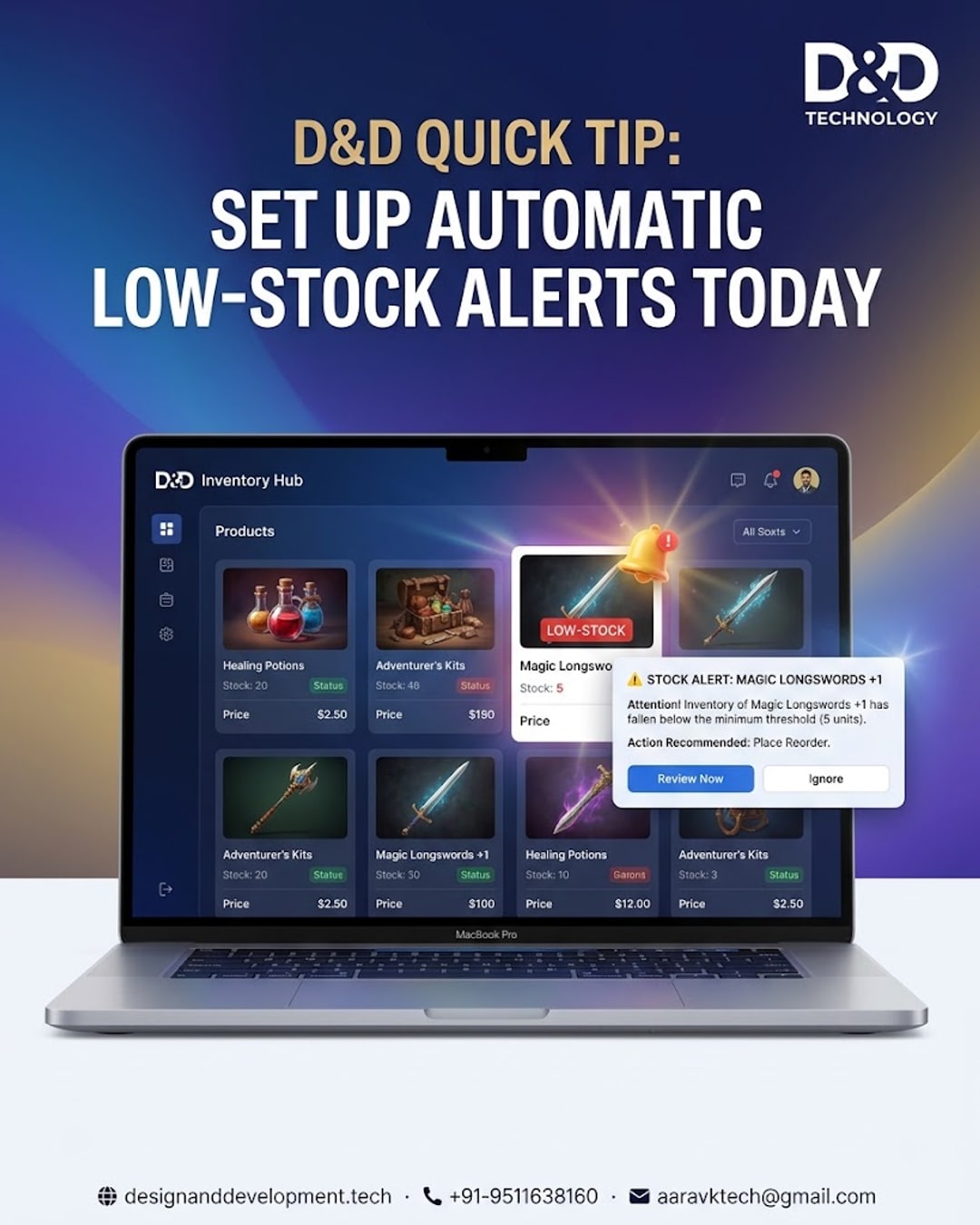
Set a minimum quantity for each product or raw material. The moment your stock hits that number, the system sends you an alert by email, WhatsApp, or dashboard notification. You get days or weeks of lead time instead of finding out at zero. Even a simple spreadsheet formula can flag this manually, but it still relies on someone checking it regularly, which is exactly where things fall through.
What this looks like inside a real system
Inside a proper inventory setup, each product carries its own threshold based on how fast it sells and how long reordering takes. Fast-moving items get a higher buffer, slow movers get a lower one. Alerts route straight to whoever manages purchasing, so nothing depends on someone remembering to check a sheet.
Why this matters more as you grow
A handful of products is easy to track by memory. Fifty or five hundred is not. As product lines grow, manual tracking becomes the bottleneck that quietly limits how much you can scale, because someone is always one missed check away from an empty shelf or an unhappy customer.
How D&D Technology fits into this
We build custom inventory and business management software with automated stock alerts built around how your business actually orders, sells, and restocks. It is not a generic template. It reflects your suppliers, your lead times, and your product categories.
My take: if you are currently tracking stock in a notebook or a spreadsheet nobody checks daily, start with the threshold habit this week, even manually. But if you are managing more than a few dozen SKUs or multiple sales channels, it is worth having this built properly into your software rather than patched together. That is the difference between finding out you are low on stock, and finding out you already lost the sale.
🌐 designanddevelopment.in · 📞 +91-7296994920 · 📧 aaravktech@gmail.com


Discussion0