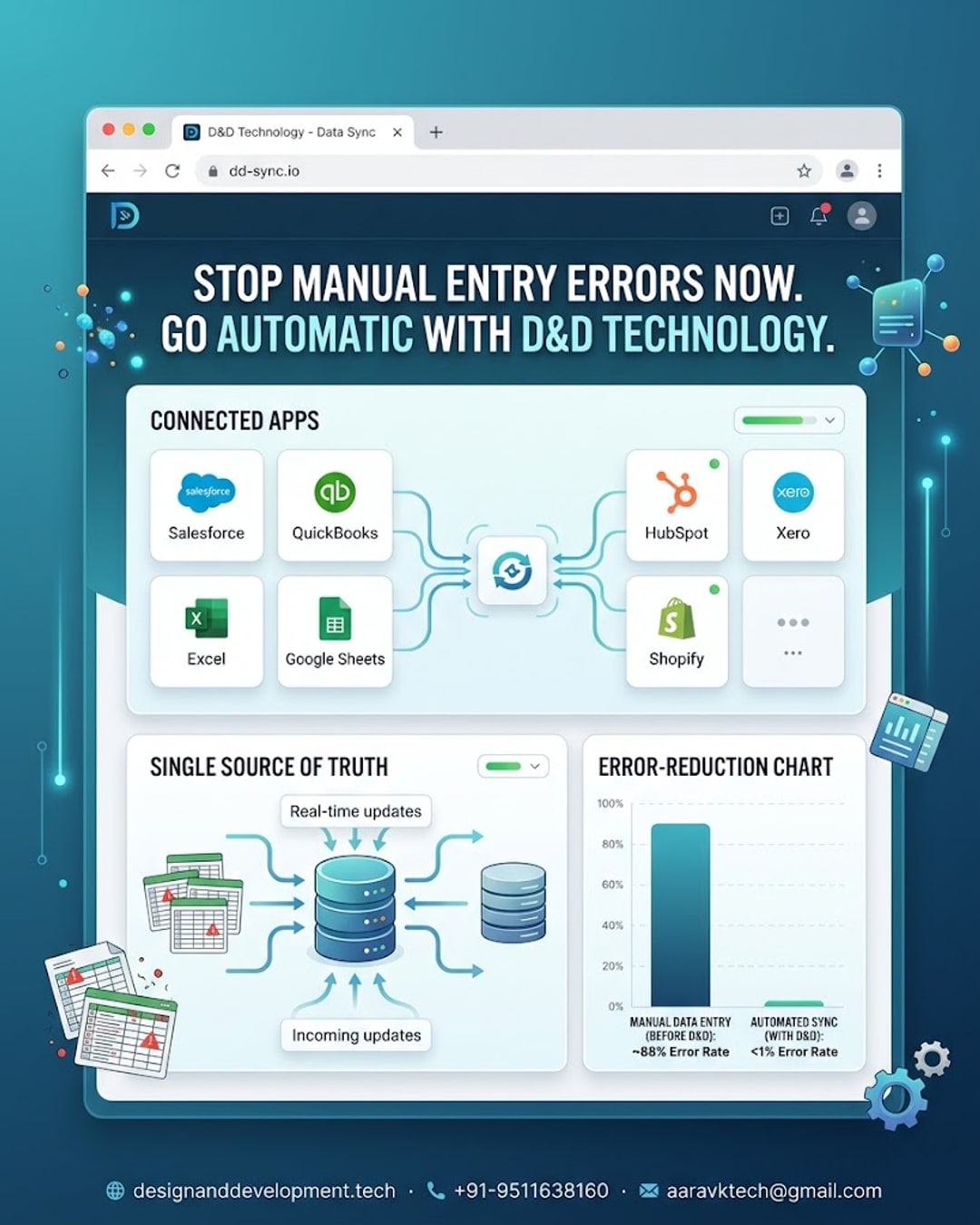
Why 88% of Spreadsheets Are Quietly Costing You Money
If your team still copies numbers from one spreadsheet into another, or retypes an order from WhatsApp into Excel and then again into an accounting tool, you're not alone — and you're also not safe from the errors that come with it. Multiple studies on spreadsheet usage put the error rate at around 88%, and the leading cause is simple: humans retyping the same information more than once.
This post looks at where those errors actually come from, why they matter more than they seem, and how a connected business system removes the problem at its root instead of just patching it.
Where the errors actually creep in
Most businesses don't have one system — they have five or six. A sale gets noted in a register, then typed into Excel, then messaged on WhatsApp, then entered again into an accounting tool. Every handoff is a chance for a typo, a skipped row, or a wrong figure. It's rarely one big mistake — it's dozens of tiny ones that add up over a month.
The real cost of manual data entry
A wrong quantity in inventory means you either over-order or run out of stock. A mismatched invoice figure means awkward conversations with customers. A missed row in a sales report means decisions get made on incomplete numbers. None of this shows up as one dramatic failure — it shows up as slow, steady friction that makes the business harder to run.
Why fixing it in Excel only goes so far
Better spreadsheet templates or stricter checklists can reduce mistakes, but they don't remove the core problem: the same piece of information is still being typed in more than once, by more than one person, in more than one place. As long as that's true, errors will keep happening — just slightly less often.
What a connected system actually changes
A custom business system built around your workflow — whether that's a CRM, an ERP, or a simpler connected dashboard — lets data be entered once and reflected automatically wherever it's needed. A new order updates inventory, triggers accounts, and shows up in reports without anyone retyping a single number. This is the core of what D&D Technology builds: not just software, but systems designed to remove repeated manual entry entirely.
Is this only for large businesses?
No. Even a small retailer juggling WhatsApp orders, a spreadsheet, and a billing app benefits from connecting those three things into one simple flow. The size of the fix depends on the size of the business — the principle stays the same.
My take: if your team is spending real hours every week re-entering the same data across tools, that's not a training problem — it's a systems problem. For a small business, start by identifying the one workflow where double entry happens most often (usually orders or invoicing) and get that connected first. If you're already juggling five or more disconnected tools, it's worth having a proper conversation about a custom connected system rather than adding another spreadsheet template to the pile.
🌐 designanddevelopment.in · 📞 +91-7296994920 · 📧 aaravktech@gmail.com


Discussion0