Why Most Factories Are Flying Blind on Machine Downtime
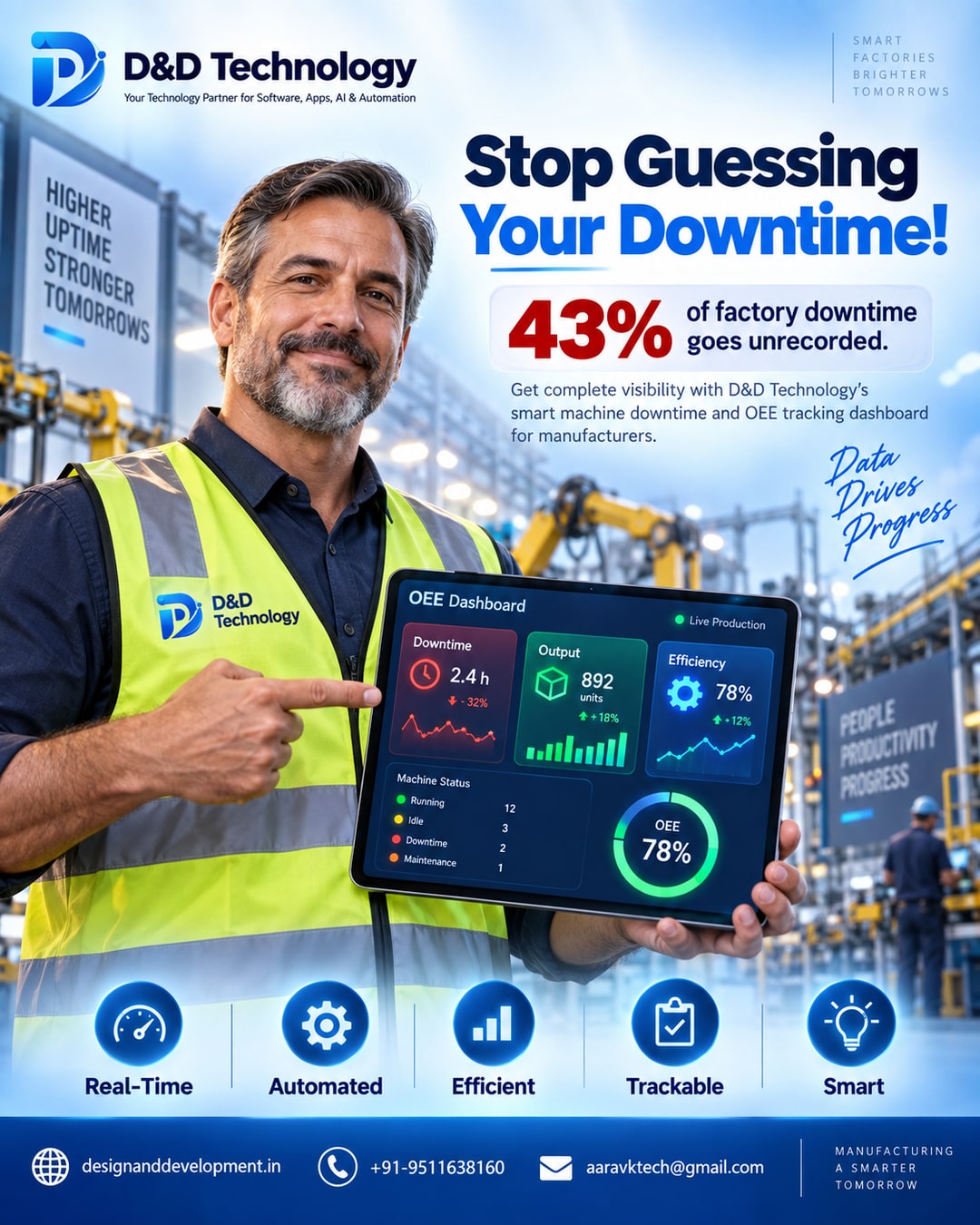
Ask a factory owner how much downtime their machines had last month, and you'll usually get a rough guess, not a real number. Industry estimates suggest close to 43% of factory downtime never gets formally logged anywhere. It just disappears into missed shifts, delayed orders, and margins nobody can quite explain. If that sounds familiar, you're not alone - and it's fixable.
What Downtime Actually Costs You Beyond the Obvious
Every unrecorded stoppage - a machine waiting on a part, an operator troubleshooting a jam, a changeover taking longer than it should - adds up. Without a system tracking these events, factory owners end up managing production reactively. Orders slip, and nobody can pinpoint exactly why. The real cost isn't just the downtime itself; it's the decisions made without knowing it happened.
Why Spreadsheets and Paper Logs Fall Short
Many factories still rely on paper logs or end-of-shift spreadsheet entries to track machine performance. The problem is timing and accuracy. By the time someone writes down that a machine was down for 40 minutes, the details are already fuzzy, and nobody's cross-referencing it against output or efficiency targets. It becomes historical trivia instead of actionable insight.
What an OEE Dashboard Actually Shows You
Overall Equipment Effectiveness, or OEE, is a simple idea: it measures availability, performance, and quality together, so you get one clear efficiency number per machine, per shift, per line. A custom dashboard pulls this together in real time - showing which machines are down, for how long, and why - instead of you piecing it together after the fact. Managers can see patterns: a specific machine failing every Tuesday, a changeover process eating more time than it should, a shift consistently underperforming.
Built Around Your Factory, Not a Generic Template
Every factory floor is different - different machines, different processes, different reporting needs. That's why D&D Technology builds these dashboards custom, connected to how your production actually runs, rather than forcing your factory into a rigid off-the-shelf tool. The goal isn't more software for its own sake - it's a clear, honest picture of where your time and output are actually going.
My Take
If you're running a small operation with two or three machines, start simple - a basic downtime logging system with clear categories (mechanical, operator, material wait) will already tell you more than you know today. If you're running a larger plant with multiple lines and shifts, it's worth investing in a proper custom OEE dashboard from day one - the patterns you'll catch in the first 90 days alone usually justify the build. Either way, the worst option is staying with paper logs and hoping nothing important slips through, because at 43% unrecorded downtime, something almost always does.
🌐 designanddevelopment.in · 📞 +91-7296994920 · 📧 aaravktech@gmail.com


Discussion0